Space Alliance to Protect the Sea
Minister of Fisheries and Ocean Policy, Marianne Sivertsen Næss, opened the first board meeting of the Space4Ocean Alliance yesterday. This is global partnership bringing together space agencies, international organisations and industry to find new ways to preserve and protect the world’s oceans.
Christer Aasen
November 13, 2025

“Together our mission is clear: to strengthen the link between the space sector and those who rely on satellite-based ocean data. And to assure that free and open data reaches those that need it most, especially in developing countries,” the minister said in her opening speech.
“Through the Blue Justice initiative, Norway has developed a pioneering digital infrastructure that delivers satellite-based information directly to member countries. Now, with space 4 ocean, we have the opportunity to go even further. Delivering more relevant, more timely data to support our shared efforts to combat fisheries crime and promote ocean sustainability,” she said.
Credit: NOSA
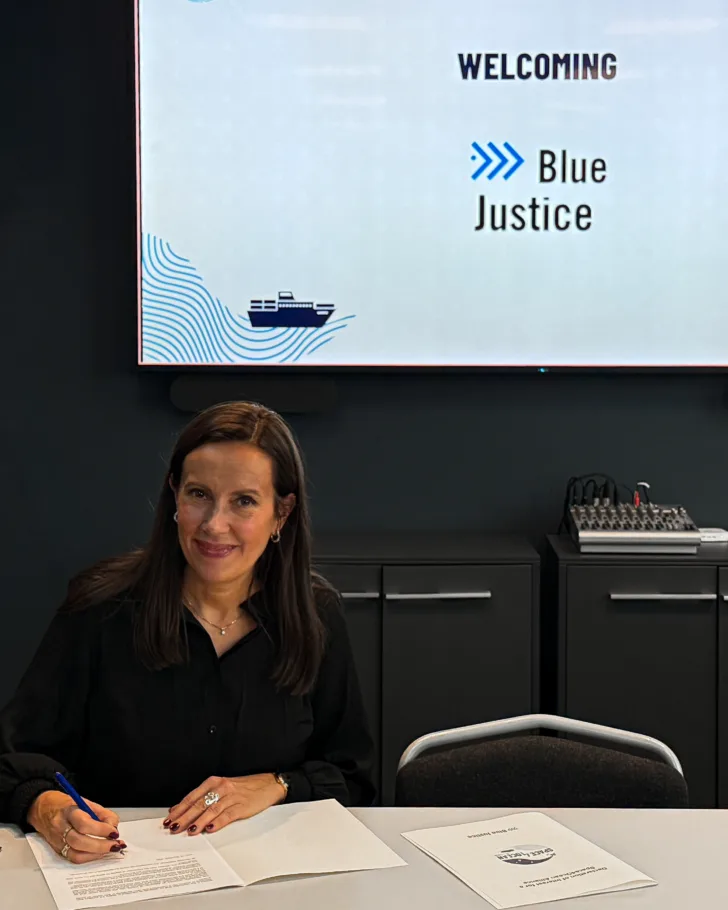
Minister of Fisheries and Ocean Policy, Marianne Sivertsen Næss, signed the declaration on behalf of the Blue Justice initiative.
Sivertsen Næss then signed the declaration making the Blue Justice initiative a member of the Space4Ocean Alliance.
Space agencies and maritime organizations from around the world signed a “Declaration of Interest for a Space4Ocean Alliance” at the UN Ocean Conference in Nice in June 2025. Christian Hauglie-Hanssen, Director General of the Norwegian Space Agency, signed on behalf of Norway.
Through bilateral dialogue with the French space agency CNES, the Norwegian Space Agency has contributed to the Space4Ocean process and is one of the alliance’s founding members.
Satellites and Space Tech
Using innovative space technology, observation data, and monitoring tools, the alliance will support countries affected by climate change and contribute to the UN Sustainable Development Goals and other international frameworks.
The alliance’s first board meeting was held at the Norwegian Space Agency in Oslo on November 12. The board serves as the alliance’s top decision-making body, coordinating and guiding its work. Participants included representatives from space and maritime organizations from many of the 29 member states, observer countries, and soon-to-be members, as well as the United Nations Office for Outer Space Affairs.
The meeting will be followed by an industry day on November 13, where Norwegian companies will present enabling technologies and services.
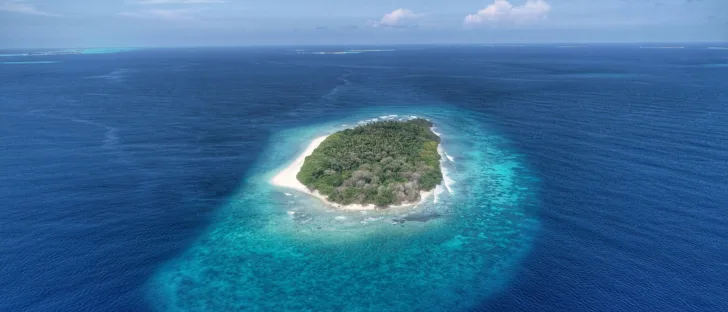
Some countries are more vulnerable to climate change than others. The Maldives is one of them. With an average height above sea level of 1.5 meters, the island nation is extremely exposed to rising sea levels. Fishing is a key source of income, and sustainable harvesting of marine resources is essential. The Maldives is represented in Space4Ocean, and the alliance’s success will be crucial for the country’s future.
Connecting the disconnect
Madin Maseeh, President of the Maldives Space Research Organisation, says there has long been a gap between the ocean and climate communities and the space sector. He explains that this disconnect has arisen partly because the potential of space technology has sometimes been overhyped, but also because its real capabilities have often been underestimated.
Credit: Ahmed Shan
The Maldives, a country vulnerable to rising sea levels.
“It is this disconnect that we are hoping can be meaningfully solved through this alliance,” he says. He adds that there are also many parallels and lessons that the ocean can offer the space sector. It’s not only about what space can do for the ocean, but also what the ocean can do for space.
An example of this is sea surface temperature. It is usually measured once a day by satellites to help calculate global warming over time.
“But when we speak to our fisheries we understand that sea surface temperatures can help us understand where the tuna will not be, or where they might be, and help telling where our fishermen might go. So it goes both ways. We will bring these lived experiences to the alliance,” Maseeh says.
In other words, if the fishermen had access to more frequent measurements, they could work much more efficiently. By providing feedback to Space4Ocean about such opportunities, end users can help improve satellite services, making them even more useful.
Bridging the gap
“We are a country that cannot afford this to be a paper tiger. We know exactly what the end users need, we know exactly where the gaps are, and our role is to bring this to the attention of the rest of the members, but also to speak directly to the end users in the country to bridge the gap. Whatever we produce here, whether it is services or best practices, we immediately get feedback,” he says.
“The alliance has to produce something tangible. And I think that’s the direction they are heading.”